
Las Fallas is Valencia’s biggest festival, held every year from 1 to 19 March, when hundreds of giant satirical sculptures fill the streets and are then burned on the night of 19 March. The build-up lasts all month, but the part most visitors come for runs from 15 to 19 March. In 2027 that is Monday to Friday, with the final burning on the night of Friday 19 March.
This guide covers what happens on each day, where to stand for the loudest and brightest moments, how to plan transport and accommodation, and the etiquette that keeps you on good terms with the locals. If you are still deciding what else to see in the city, start with our Valencia city guide.
Key takeaways
- Las Fallas runs 1 to 19 March. The main days are 15 to 19 March, ending with the cremà (burning) on the night of 19 March.
- A mascletà (daytime firecracker show) goes off at 14:00 every day of the festival in Plaza del Ayuntamiento.
- Around 750 large and children’s fallas were set up across the city in 2026, and almost all of them burn on the final night.
- UNESCO added the Valencia Fallas festivity to its list of the Intangible Cultural Heritage of Humanity in 2016.
- Book accommodation early and plan to walk. Much of the centre is closed to traffic during the main days.
What Is Las Fallas?
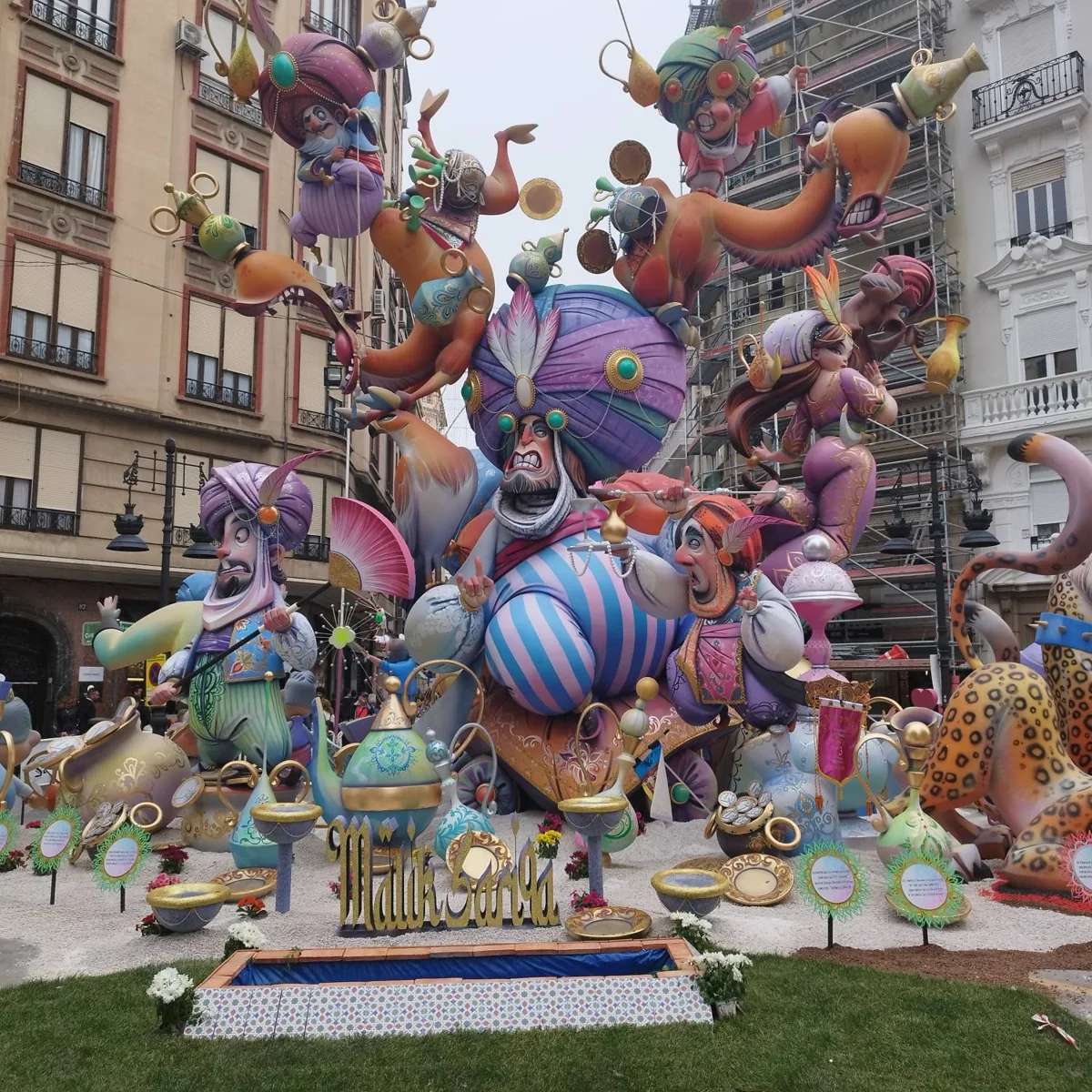
Las Fallas (Falles in Valencian) is a spring festival in which each neighbourhood builds a monument called a falla, displays it in the street for several days and then burns it. Every falla is made up of individual figures known as ninots, many of them caricatures of politicians, celebrities and everyday life. The humour is sharp, local and often political, so part of the fun is reading the small scenes and captions around the base.

UNESCO inscribed the Valencia Fallas festivity on its Representative List of the Intangible Cultural Heritage of Humanity in 2016. Its description presents the festival as a community celebration of spring in which the burning of the monuments symbolises purification and renewal. It also stresses how the festival keeps traditional crafts alive, from sculpting ninots to making the silk costumes that falleros and falleras wear.
Behind each monument is a falla commission, a neighbourhood association that raises money all year through membership fees, raffles and events. The Universitat de València study cited later in this guide counted 384 commissions in 2023. They compete for prizes in several sections, and the most ambitious entries sit in the Special Section, where the biggest budgets and the tallest structures are found.
A short history
The most common explanation for the festival’s origin goes back to Valencia’s carpenters. Before spring, they are said to have burned the wooden supports and leftover scraps from their workshops on the feast of Saint Joseph, their patron saint, on 19 March. Over time the bonfires gained clothing and faces, turning into figures that mocked local characters. By the 20th century they had become the elaborate, professionally built sculptures you see today.
When Is Las Fallas 2027?
Las Fallas 2027 runs from Monday 1 March to Friday 19 March. The mascletà starts on 1 March, but the monuments only appear in the streets on the night of 15 March. If you can only visit for a few days, arrive by 15 March and stay until the morning of 20 March.
Because 19 March 2027 falls on a Friday, the final night leads straight into a weekend. That is good for anyone who wants to stay on and recover, but expect it to push up demand for rooms on the last nights. Official times are confirmed each year in the programme published by the city and Visit València, so check it before you travel.
| Date | Event | Where | Typical time |
|---|---|---|---|
| Early February to mid-March | Ninot Exhibition (Exposició del Ninot) | Science Museum, City of Arts and Sciences | Museum hours |
| Last Sunday of February | La Crida, the official opening call | Torres de Serranos | Evening |
| 1 to 19 March | Mascletà | Plaza del Ayuntamiento | 14:00 |
| Night of 15 to 16 March | Plantà, the monuments go up | All neighbourhoods | Overnight |
| 16 to 18 March | Night fireworks, closing with the Nit del Foc on 18 March | Turia riverbed area | Around midnight |
| 17 and 18 March | Flower Offering (Ofrenda) | Ends in Plaza de la Virgen | 15:30 to 01:00 |
| 19 March | Cremà, the burning | All neighbourhoods | From 20:00 (children’s fallas) and 22:00 (large fallas) |
The Main Events Day by Day
La Crida and the Ninot Exhibition
The festival officially opens with La Crida, the call, when the Fallera Mayor of Valencia invites everyone to join the celebration from the medieval Torres de Serranos gate. It takes place in late February, usually on the last Sunday of the month.
Around the same time, the Ninot Exhibition opens at the Science Museum in the City of Arts and Sciences. Every commission sends one figure, and visitors vote for their favourite. The winning ninot is the ninot indultat, the pardoned figure, which is spared from the fire and moved to the Fallas Museum. In 2026 the exhibition closed on 15 March, the day before the plantà. The exhibition is the best way to see the craftsmanship up close before the crowds arrive.

The mascletà, every day at 14:00
The mascletà is a daytime pyrotechnic show built around rhythm and noise rather than light. For several minutes, strings of firecrackers explode in carefully timed sequences that build to a ground-shaking finale. It goes off at 14:00 each day from 1 to 19 March in Plaza del Ayuntamiento, the main square in front of City Hall.
The square fills up well before the show, especially on weekends and from 15 March onwards. Arrive at least an hour early if you want to be inside the barriers. You feel a mascletà in your chest as much as you hear it, so bring earplugs for children and anyone sensitive to noise. Standing further back on the side streets still gives you a strong experience with far less crush.
The plantà, 15 to 16 March
The plantà is the night the monuments are assembled in their final positions. Children’s fallas (fallas infantiles) are set up first, and the large ones are finished overnight so that they stand complete by the morning of 16 March, when the jury awards are announced. Cranes, scaffolding and teams of artists work through the night, and walking between sites in the small hours is one of the most memorable ways to see the festival.
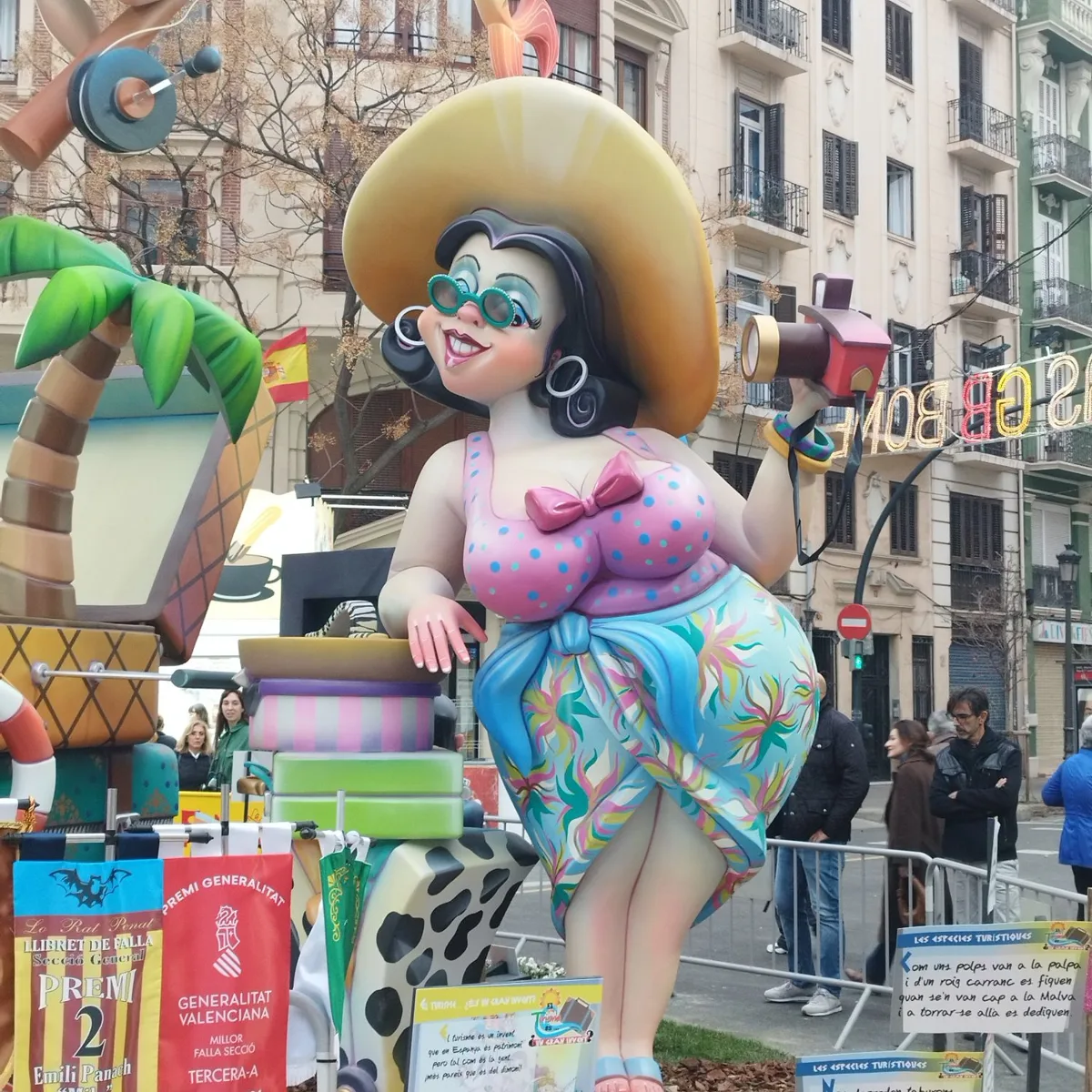
From 16 March onwards, the whole city becomes an open-air gallery. The Special Section monuments are the tallest and most detailed, and budgets for the top entries run well above 100,000 euros, according to elDiario.es.
The Flower Offering, 17 and 18 March
The Ofrenda is the most emotional part of Las Fallas. Over two afternoons and evenings, tens of thousands of falleros and falleras in traditional dress parade through the centre, each carrying a bouquet for the Virgen de los Desamparados, Valencia’s patron. The flowers are passed up onto a giant wooden frame in Plaza de la Virgen and arranged to form her cloak, which grows over the two days into a huge floral image.
The parade runs from 15:30 until around 01:00 on both days. For a good view without the crush, pick a spot along Calle de San Vicente Mártir or around the cathedral. The finished floral mantle stays on display for a few days after the festival and is worth a daytime visit.
The night fireworks and the Nit del Foc
Once the monuments are up, the evenings end with large firework displays, usually held around midnight in the old Turia riverbed near the City of Arts and Sciences. The biggest is the Nit del Foc, the Night of Fire, in the early hours after 18 March. It is the most spectacular aerial show of the festival, so find a place along the Turia gardens early.
The cremà, 19 March
The festival ends on the night of 19 March, Saint Joseph’s Day, when almost every falla is burned. According to the Visit València 2026 programme, the children’s fallas burn from 20:00, the large ones from 22:00, and the first-prize Special Section falla and the City Hall falla close the night at 22:30 and 23:00.
Watching a large falla burn is strangely moving after seeing the months of work that went into it. Firefighters soak the surrounding buildings, a string of firecrackers lights the monument, and within minutes the structure collapses into flames. Choose a smaller neighbourhood falla for a closer view, then walk towards the centre later for the final burning in Plaza del Ayuntamiento. That one is packed, so arrive very early or watch from a side street.
How Big Is Las Fallas? The Festival in Numbers
Las Fallas is one of Spain’s largest street festivals by both scale and economic impact. Around 750 large and children’s fallas were set up across the city in 2026, according to elDiario.es. Almost all of them are reduced to ashes in a single night.
A study by the Chair of Sustainable Economic Model València i Entorn at the Universitat de València, published in March 2024, estimated that the 2023 festival generated a total economic contribution of 732.6 million euros and about 6,500 jobs (Invest in València, retrieved 25 September 2026). Visitor and resident spending was the largest single item, at 269 million euros. That is why hotels and restaurants treat March as their high season.
Demand for rooms is high but not unlimited. Fundación Visit València forecast 67% hotel occupancy for the week of 13 to 19 March 2026, peaking at 76.7% on the night of 18 to 19 March, with an average room rate of 166 euros (Ajuntament de València, 10 March 2026). In 2026 the main days fell on weekdays. With the 2027 cremà on a Friday, expect the final nights to be in higher demand.
How to Plan Your Trip to Las Fallas
How many days do you need?
Four nights is the sweet spot for most visitors. Arriving on 15 March lets you see the plantà, several mascletàs, both days of the Flower Offering and the cremà. With only a weekend, choose between the build-up with the monuments in place (16 to 18 March) or the final night on 19 March. You can then use the rest of your time for day trips in the Valencian Community.
Where to stay
Staying in or near Ciutat Vella (the old town), Ruzafa or Eixample puts you within walking distance of the main events and the best monuments. The trade-off is noise, as firecrackers go off at all hours and street parties run late. If you need sleep, choose a hotel near a metro station outside the centre, such as around Benimaclet or the beach at Cabanyal. The metro runs extended services during the main days. Book as early as possible, because central rooms for the cremà often sell out months ahead.
Getting there and getting around
Valencia airport is connected to the city by metro lines 3 and 5. Joaquín Sorolla station receives high-speed trains from Madrid in around two hours. During the main days, much of the centre is closed to traffic and many bus routes are diverted. Walking and the metro are the most reliable ways to get around. Leave the car at your hotel or skip it altogether.
How to find the best fallas
The Special Section monuments cluster in a few neighbourhoods and are the most spectacular, but also the most crowded. A good route links Convento Jerusalén near the Estació del Nord, Sueca-Literato Azorín and Cuba-Literato Azorín in Ruzafa, and Plaza del Pilar in the old town. Check the latest prizes and locations in the official app or at Visit València, as the winning commissions change every year. Visit the big monuments early in the morning or late at night, when the crowds are thinner. In Ruzafa, come back after dark to see the elaborate street lighting.

Eating and Drinking During Las Fallas
Food is part of the festival, not a break from it. Stalls across the city fry buñuelos de calabaza, pumpkin fritters served with thick hot chocolate, which you will smell long before you see them. Churros and porras are everywhere too. Falla commissions also cook huge paellas in the street for their members during the festival.
For a sit-down meal, book ahead. Many restaurants in the centre run special menus or close to non-reservation guests during the main days. This is also the time to try a proper Valencian paella, made with chicken, rabbit and flat green beans, ideally at lunch as locals do.
Las Fallas Etiquette and Safety Tips
Las Fallas is loud, crowded and joyful, and a few habits make it much easier to enjoy.
- Protect your ears. Bring earplugs for the mascletà and for children, who often find it overwhelming.
- Watch where you walk. Firecrackers are thrown in the street at all hours, especially by children. Wear closed shoes and cotton or wool clothing rather than synthetics.
- Respect the barriers. At the cremà, firefighters decide how close the public can stand. Moving barriers or getting too close to the fire is dangerous and frowned upon.
- Do not climb on the monuments. The fallas are fragile works of art until the moment they burn.
- Keep an eye on your belongings. Crowds at the mascletà, the Ofrenda and the cremà attract pickpockets.
- Give way to parades. Falleros march with bands throughout the day. Step aside and enjoy the music.
If You Miss the Festival, Visit the Fallas Museum
If your trip does not line up with March, the Fallas Museum (Museu Faller) in Plaza de Monteolivete keeps the tradition on view all year. It displays the ninots indultats, the figures pardoned from the flames by public vote, going back decades, alongside posters and photographs from past festivals. It sits within walking distance of the City of Arts and Sciences, so you can easily combine the two on the same day.
Frequently Asked Questions About Las Fallas
What are the dates of Las Fallas 2027?
Las Fallas 2027 runs from 1 to 19 March. The main days are 15 to 19 March, and the cremà, when the monuments burn, takes place on the night of Friday 19 March.
Is Las Fallas free to attend?
Yes. The monuments, the mascletà, the Flower Offering, the fireworks and the cremà are free and held in public spaces. The Ninot Exhibition and the Fallas Museum charge a small entry fee, and grandstand seats for some events can be booked.
Is Las Fallas suitable for children?
Yes, with preparation. Children’s fallas and the daytime events are very family-friendly. Bring ear protection for the mascletà and avoid the densest crowds at the final burning in Plaza del Ayuntamiento.
What is the best day to visit Las Fallas?
If you can choose only one day, go on 18 March. The monuments are all standing, the Flower Offering is in full swing, there is a mascletà at 14:00, and the Nit del Foc fireworks follow at night. Stay one more night if you can to see the cremà on 19 March.
Plan Your Las Fallas Trip
Las Fallas combines art, satire, noise, fire and faith, and no other European festival quite matches it. Arrive by 15 March, book your room early, and plan your days around the 14:00 mascletà and the night of 19 March.
- Dates to remember: 1 to 19 March, with the main days from 15 March.
- Must-see moments: the plantà, a mascletà, the Flower Offering and the cremà.
- Practical tips: stay central or near the metro, carry earplugs and walk everywhere.
Once the ashes have cooled, take your time exploring the rest of the city with our guide to things to do in Valencia, or head further afield with ideas from our Valencian Community travel guide.